
Tapus Skating Adventure Mods Game



How To Play Tapus Skating Adventure
The core mechanic in Tapus Skating Adventure is the ollie, which serves as the sole action governing all vertical movements. On a computer, hitting the Spacebar initiates the jump; on handheld devices, tapping any area of the screen performs this identical operation. This single-button framework ensures that every choice revolves around when to activate the command, rather than which key to select.
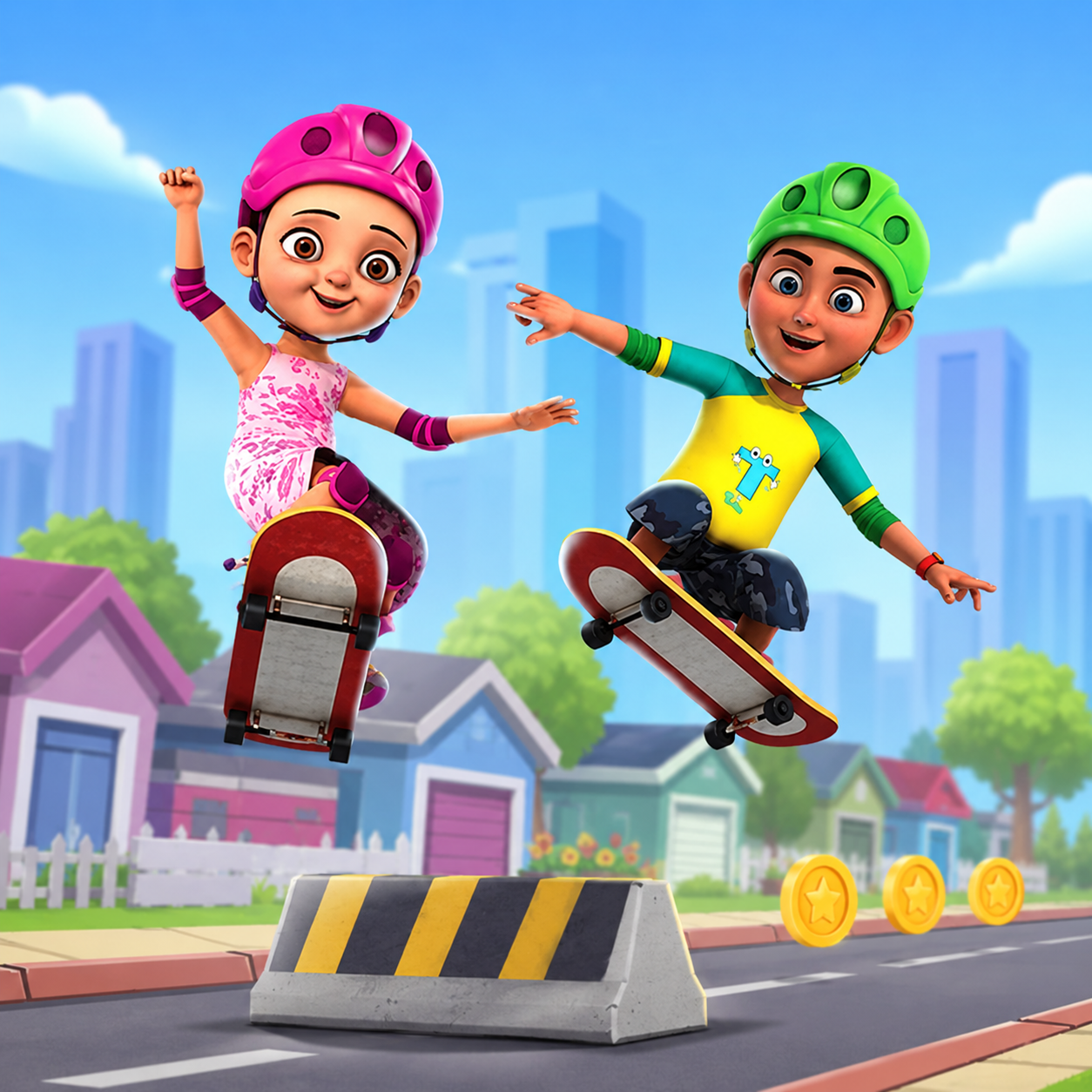
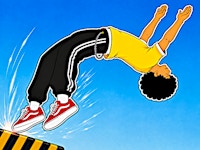
Tappu automatically glides ahead along a straight urban pathway. Your responsibility is to choose the precise instant he lifts off from the ground. The route is filled with an assortment of fixed obstructions: benches, refuse bins, traffic cones, and other street items. Certain barriers can be overcome with a straightforward, well-timed leap, whereas others are positioned lower and necessitate a delayed ascent to prevent the skateboard from making contact. The challenge lies in evaluating every barrier.
Tapus Skating Adventure Wiki
Summary
Tapus Skating Adventure delivers a lively, high-speed skateboarding experience centered on a surprisingly straightforward single-button control mechanism and an unyielding focus on precise timing. The player assumes the role of Tappu, a character who temporarily abandons his customary cricket activities to undertake a journey through a cityscape filled with barriers while riding a skateboard. The primary goal is simple: progress along a crowded urban route, execute ollies at the exact right moments, gather coins and letter-shaped items to increase the score, and steer clear of any collision that would end the session. Although the controls are instantly understandable, the game’s complexity arises from the necessity to identify obstacles early, determine the proper moment to leap, and weigh the lure of valuable collectibles against the need for a secure landing. Achievement depends not on frantic button pressing, but on thoughtful, accurately measured inputs that consider the shifting distance and arrangement of hazards. The challenge intensifies in segments that require successive jumps, the utilization of trampolines to extend airborne travel, and configurations of street furnishings like benches, trash bins, and traffic cones, each demanding a distinct approach. Featuring a vivid color scheme, a clear scoring system, and immediate feedback on every run, Tapus Skating Adventure provides a gratifying test for players who enjoy skill-driven endless runners that prioritize observation over mere reflexes.
Reviewing the path well ahead of time is essential for reacting appropriately. Leaping too early might cause Tappu to descend directly in front of an obstruction; jumping too late results in a crash before he ascends high enough. Certain sections include gaps that require a perfectly timed ollie, and others feature trampolines placed to propel the player across extended distances—these should be recognized as separate mechanical elements rather than treated like typical hurdles.
Coins are distributed throughout the course, frequently positioned along paths that encourage higher or more dangerous trajectories. Alphabet pickups (letters) introduce an extra scoring dimension, rewarding players who diverge from the most straightforward route. Collecting these items boosts the overall score, but pursuing every coin or letter may place Tappu in an unfavorable spot for the next obstruction. A flawless run therefore demands constant forward planning: you must evaluate whether the prize is worth the danger, where Tappu will land, and whether sufficient time remains to prepare for the upcoming hazard.
Repeatedly pressing the jump button without observing the course proves ineffective because each jump alters Tappu’s position, speed, and landing moment. Consecutive barriers may require multiple jumps in rapid succession, and the trampolines offer extended airtime that must be utilized to clear longer sequences. The game never demands complex button combinations or directional commands; mastery arises solely from timing discipline and spatial awareness.
Key Features
- Single-Button Control Mechanism – The entire gameplay loop revolves around a single input (spacebar or tap). This minimal interaction lowers the entry barrier while placing a premium on timing accuracy. The simplicity allows players to concentrate entirely on reading the course instead of managing multiple actions.
- Urban Obstacle Course – The setting is a bustling city street filled with a diverse assortment of everyday barriers: benches, trash cans, traffic cones, and other street furniture. Each type of hurdle presents a distinct timing challenge, and their arrangement creates dynamic, non-repetitive sequences.
- Collectible-Based Scoring – Two categories of pickups enhance the scoring system: scattered coins that reward riskier paths, and alphabet letters that contribute to a bonus score. The presence of these collectibles encourages players to explore alternative routes and make trade-offs between safety and score maximization.
- The Ollie as Core Mechanic – The ollie is not merely a jump; it is the central action that defines movement through the course. Proper use of the ollie enables obstacle avoidance, coin collection, and completion of skateboarding feats. The game offers no power-ups, alternate moves, or defensive options, making the timing of every ollie critical.
- Trampoline Integration – Trampolines are placed at strategic points to extend Tappu’s aerial movement. They function as a distinct gameplay element that must be recognized and exploited for covering larger gaps or chaining jumps together. Mistaking a trampoline for a standard obstacle leads to missed opportunities or poor landing positioning.
- Progressive Difficulty Through Consecutive Jumps – Later sections of the course introduce sequences where obstacles appear in rapid succession, requiring multiple well-timed ollies with minimal recovery time. This tests the player’s ability to maintain rhythm and adapt quickly to changing spacing.
- Clean Visual Feedback – The game provides clear on-screen cues for collisions, collectible pickups, and jump height, allowing players to learn from each attempt without confusion. The bright, cartoonish art style reduces visual clutter, keeping the focus on the obstacle layout ahead.
Precautions/Tips
- Focus on the Upcoming Obstacle, Not on Tappu – A common error is to fixate on the character while he is airborne. Instead, train your gaze on the next hazard as early as possible. By the time Tappu lands, you should already know whether and when to jump again. This forward-looking approach reduces reaction delays and helps avoid last-second collisions.
- Prioritize a Safe Landing When a Coin Is Near a Hazard – Coins are often placed in tempting positions—directly above an obstacle or just before a gap. Chasing every coin can lead to a poorly timed landing that places Tappu exactly where the next hazard will hit. When the risk is high, skip the coin and focus on clearing the obstacle safely. One clean run with fewer collectibles is worth more than a crash caused by greed.
- Avoid Repeated Pressing; Use Deliberate Inputs – Spamming the jump button may feel intuitive, but it disrupts your sense of timing. Because each ollie changes Tappu’s trajectory and landing point, random presses make it difficult to predict where he will be. Develop a habit of pressing only when you have consciously judged the obstacle distance. This discipline makes the timing far easier to control.
- Treat Trampolines as Special Tools, Not Ordinary Obstacles – Trampolines behave differently from standard blocks. They provide a strong upward launch that can clear multiple obstacles in a single arc. When you see a trampoline, plan to use it to bypass a longer section or to reach high-placed coins. Do not waste its potential by jumping immediately before hitting it, or by treating it as just another jump pad without adjusting your approach.
- Learn from Each Crash and Adjust Accordingly – After a collision, take a moment to reflect on what went wrong. Was the jump too early, causing a premature descent? Or was it too late, resulting in a collision before liftoff? By consciously noting the error, you can adjust the timing on the next attempt. The game’s trial-and-error nature rewards deliberate analysis over repeated mindless attempts.
- Maintain a Consistent Rhythm, Especially in Consecutive Jump Sections – When obstacles appear in quick succession, strive for a steady cadence of jumps rather than panicked taps. A consistent rhythm helps you gauge spacing naturally. If a sequence feels rushed, try jumping slightly earlier than you think necessary; often the landing point will align better with the next obstacle.
- Don’t Overcomplicate the Controls – With only one button, there is no special move, double jump, or brake. Accept that the challenge is entirely about timing. Do not search for hidden mechanics or alternate inputs—they do not exist. Focusing on the fundamentals of when to press is the only path to improvement.
Tapus Skating Adventure Frequently Asked Questions
Q: What is Tapus Skating Adventure?
A: Tapus Skating Adventure is a vibrant skateboarding game centered on precise timing, rapid visual assessment, and straightforward single-button commands. Stepping away from his usual cricket pursuits, Tappu picks up his skateboard and embarks on a journey filled with various barriers.
Q: What is the main goal of the game?
A: The objective is to navigate safely, execute ollies, gather beneficial items, and accumulate as many points as possible before a collision brings the run to an end.
Q: How do the controls work in Tapus Skating Adventure?
A: On a computer, press the Spacebar to perform an ollie. On a mobile device, tap the screen to make Tappu jump.
Q: What kind of obstacles appear in the game?
A: Benches, trash bins, traffic cones, and other street elements block the route. Some obstacles can be cleared by jumping over them, while others may serve as surfaces for performing tricks.
Q: What is the central action in the game?
A: The ollie serves as the core maneuver. It enables Tappu to evade obstacles, reach collectible objects, and accomplish skateboarding techniques along the path.
Q: How should players time their jumps?
A: Every jump demands careful timing. If you jump too early, Tappu might land directly in front of the hazard. If you delay too long, the skateboard may collide with it before Tappu gains sufficient altitude.
Q: Are there trampolines in the game?
A: Yes, trampolines assist in extending Tappu's airborne movement, and they are best utilized to traverse longer distances rather than being treated as typical obstacles.
Q: How do coins affect gameplay?
A: Coins appear throughout the course and motivate players to choose higher or riskier routes. Collecting them boosts the score, but pursuing every coin may place Tappu in an unfavorable position for the next challenge.
Q: What are alphabet pickups?
A: Alphabet pickups offer an additional scoring chance. Gathering these letters contributes to the bonus score, encouraging players to explore beyond the most straightforward path.
Q: Is there a balance between collecting and landing safely?
A: Yes, a successful run relies on more than simply pressing the jump button whenever an item appears. You must evaluate where Tappu will land and whether there is adequate time to prepare for the upcoming obstacle.
Q: What happens after a crash?
A: Following a crash, recall whether the previous jump was executed too early or too late, and adjust your approach on the subsequent attempt.
Q: What tips are given for a smoother ride?
A: Focus on the approaching obstacle rather than solely on Tappu. Prioritize safe landings when a coin is near a hazard. Avoid pressing the button repeatedly; deliberate inputs make jump timing easier to manage.
Q: Can players perform consecutive jumps?
A: Yes, certain sections demand a series of consecutive jumps to successfully navigate through obstacles.
Q: How are wider gaps or more complicated obstacles handled?
A: Wider gaps or more complex arrangements may require a second input or assistance from a trampoline to overcome.
Q: Is repeatedly pressing the jump button effective?
A: No, repeatedly pressing without observing the course is unreliable because each jump alters Tappu's position and landing timing.
Q: What platforms is the game available on?
A: The game is accessible on desktop (using Spacebar controls) and on mobile (using tap-to-jump controls).
Q: Is there a share feature in the game?
A: Yes, players can share the game with friends by copying the link for Tapus Skating Adventure.