




Shapik The Quest Mods Game
Do Dragons Exist
Goat Rampage

Tower Rise
Horror Nun 2
Sprunki Square Shifted

Obby Survive Parkour
Bees Empire Clicker

Paint Or Hunt

Super Bear Adventure
Brave Squad
Sprunki Hyper Shifted Phase 3 Remastered

Left Or Right Spranki Beats

1 Speed Keyboard Lucky Escape

Traffic Racing

Rider Rush
Sprunki Phase 9 Ggtp

Rooster Road

Please Do Not Feed The Sprunki Brud
Endacopia

Basketball Hit
How To Play Shapik The Quest
The fundamental mechanics of Shapik The Quest are easy to understand, yet mastering them calls for a thoughtful approach. Initially, players use the primary mouse button to select a point and guide Shapik around the environment. After reaching that spot, the same click action allows them to manipulate objects, examine inventory items, and communicate with the various characters placed throughout the setting. On compatible touch displays, a simple tap performs the same role, which keeps the experience fully playable on tablets and smartphones.
The challenges in the game are seldom resolved through one isolated move. Most demand a chain of linked actions. A common solution might involve finding a crucial object in one section, determining where that object belongs in a different part of the scene, and then triggering a mechanism that finally clears the route ahead. This interconnected structure encourages persistence and close attention.
A central gameplay element is the partnership with the bee companion. The bee is far more than a decorative addition; it serves as a vital instrument for advancing through the adventure. Numerous locations remain beyond Shapik's reach because of elevation or separation. When the hero seems incapable of finishing a task by himself, players should direct their attention to higher areas and evaluate whether the bee can land on an elevated ledge, activate a far-off switch, or collect an item from a spot that would otherwise stay inaccessible. Deciding when to alternate between guiding Shapik and employing the bee is essential to overcoming the game's obstacles.
Environmental hints form another core component of the experience. The game seldom offers explicit directions, so players must interpret the surroundings. Hints can emerge from the layout of a scene, the way a character looks in a certain direction, an object marked with a specific color, or an emblem carved into a wall. It is crucial to notice any change following each action, because even a slight alteration in animation or a faint audio signal can indicate that forward movement has occurred or that a fresh possibility has opened up.
Ultimately, players should refrain from indiscriminate clicking around the screen. Rather, the best strategy is to begin by recognizing every interactive element in a scene and then think about how those elements could plausibly work together. Developing a coherent plan before taking action makes solving the puzzles more rewarding and efficient.
Shapik The Quest Wiki
Summary
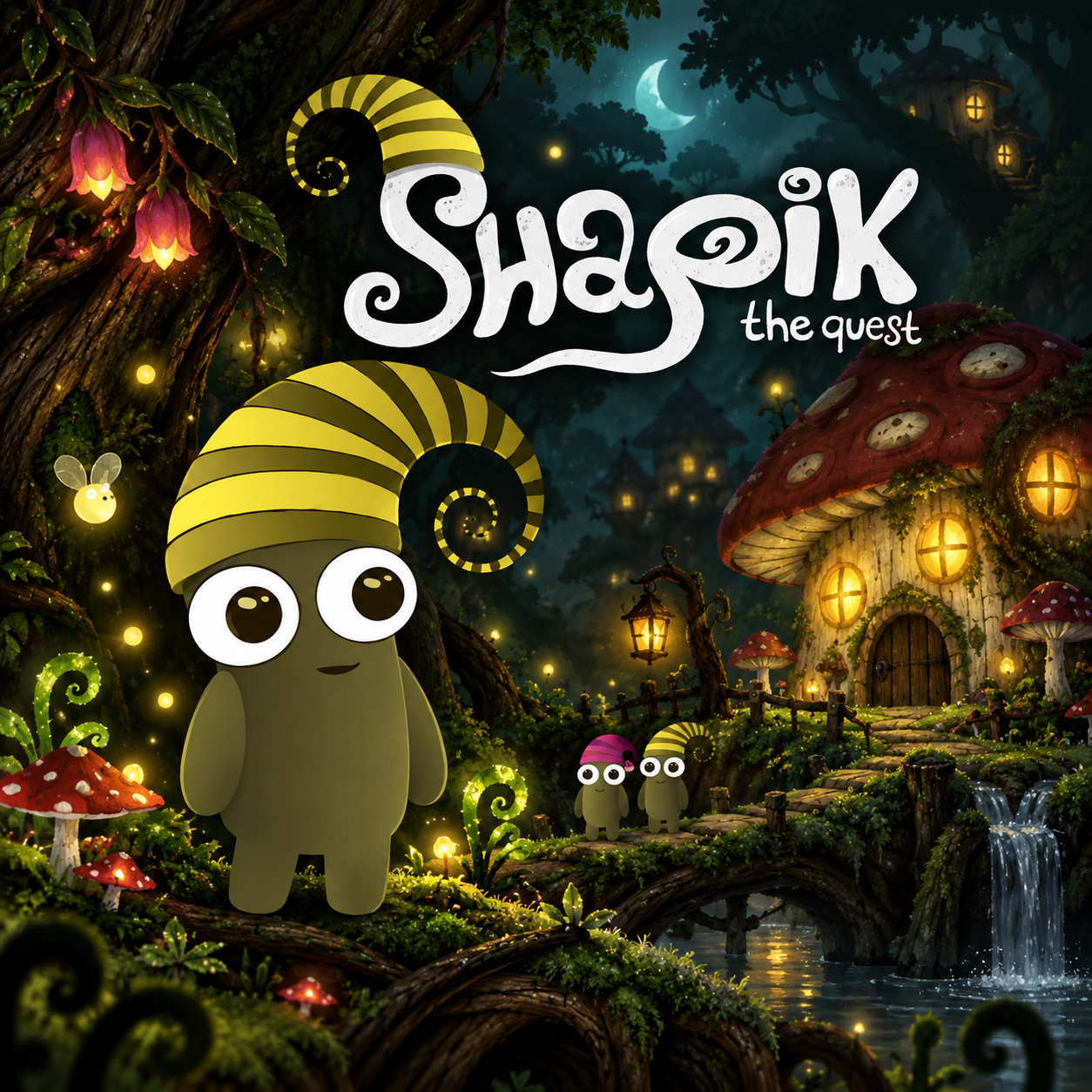
Shapik The Quest is a meticulously crafted point-and-click escapade that casts players as a tiny, resolute hero on a touching mission to locate his lost sister. With a devoted and clever bee by his side, Shapik journeys through a fanciful, hand-illustrated world filled with peculiar beings, ancient contraptions, and carefully concealed objects. What sets this game apart is its dedication to visual storytelling: there are no extended conversations or dense textual passages. Instead, the plot unfolds through expressive animations, nuanced character gestures, color choices, and symbolic details in the environment. This method keeps the experience approachable and absorbing, letting players piece together the narrative and identify their goals through observation and inquisitiveness.
The browser edition of the game contains nine separate stages, each offering a distinct challenge that demands far more than indiscriminate clicking. Players must clear obstructed routes, restore broken equipment, lend a hand to odd inhabitants, and alter the surroundings in order to advance. Every level functions as an independent puzzle environment, promoting careful exploration and thoughtful reasoning. The tranquil ambiance, along with the complete lack of time pressure, makes Shapik The Quest an excellent choice for those who appreciate contemplative, atmospheric adventures rather than frantic, action-driven entertainment.
Key Features
Shapik The Quest is distinguished by its unique artistic style and refined execution. The hand-illustrated settings are full of personality, with each level radiating its own particular mood. Verdant plants, groaning bridges, bizarre machinery, and quirky creatures are not mere decorative backdrops; they are essential elements of the puzzle design. This seamless integration of visuals and gameplay produces a world that feels vibrant and full of intent.
The game’s approach to narrative is another defining characteristic. By choosing to communicate the story without any dialogue, the creators have crafted an experience that overcomes language barriers and encourages players to rely on visual interpretation. The absence of written text lends the adventure a serene, enigmatic quality, while the emotive character animations ensure that the bond between the player, Shapik, and his mission remains powerful throughout.
The soundtrack adds another layer to the experience. Gentle, melodic tunes accompany the player during the entire journey, highlighting the unhurried rhythm of the game. There is no countdown, no losing condition, and no urgency whatsoever. This soothing atmosphere invites players to linger in each scene, take in every detail, and slowly work out the reasoning behind each puzzle. The game trusts the player’s intellect and values careful observation far more than quick reflexes.
When it comes to controls, the game is pleasantly uncomplicated. A single left mouse button handles nearly every action, including movement, inspection, selection, and interaction. This minimal input scheme makes the title easy for newcomers to grasp, while still offering enough depth to satisfy experienced adventure game fans. Touchscreen compatibility also guarantees a smooth transition between desktop and mobile devices, preserving the same intuitive feel across all platforms.
Precautions/Tips
For those just starting out, a few essential pieces of advice can greatly improve the experience and help avoid frustration. Above all, resist the temptation to click randomly. Shapik The Quest is a logic-driven adventure, and every object has a purpose. Haphazard clicking might occasionally uncover a hidden item, but a far more effective approach is to stop, examine the scene, and think about how the various elements might be connected.
Keeping a close watch on the bee is absolutely vital. If Shapik cannot reach something, or if a puzzle appears unsolvable from his current position, the bee is almost certainly the answer. Always check the upper portions of the screen, because many important objects and triggers are deliberately placed above ground level to require the bee’s help.
Another useful habit is to look for changes after every interaction. The game communicates progress through subtle visual feedback. A character’s expression might change, a small mechanism might turn, a light might switch on, or a faint sound might be heard in the distance. These cues are not accidental; they are the game’s way of pointing the player toward the next logical step. By remaining alert, players can frequently solve puzzles without ever feeling lost.
Finally, always remember that there is no time limit. The greatest strength of Shapik The Quest is its relaxed pacing. Do not hurry through the levels. Take a moment to appreciate the hand-drawn artwork, listen to the soothing music, and fully immerse yourself in the atmosphere. A patient and observant mindset will always be rewarded in this charming adventure.
Shapik The Quest Frequently Asked Questions
Q: What type of game is Shapik: The Quest?
A: Shapik: The Quest, also referred to as Shapik The Quest, is an adventure game built around pointing and clicking. It follows a small protagonist who is looking for his missing sister. With a helpful bee accompanying him, Shapik explores a magical world that contains strange creatures, hidden objects, and mechanical puzzles.
Q: What is the central storyline of the game?
A: The central storyline revolves around Shapik, a little hero on a mission to find his lost sister. During his journey, he is joined by a friendly bee, and together they move through a magical environment full of mystery and discovery.
Q: How does Shapik: The Quest convey its narrative?
A: The narrative is communicated through animations, facial expressions, and visual cues rather than lengthy dialogue. This approach keeps the adventure simple to understand while retaining an air of mystery throughout.
Q: How many levels are included in the browser version?
A: The browser edition of the game contains nine levels in total.
Q: What types of obstacles are found in each level?
A: Every area presents a unique obstacle, including clearing a blocked route, fixing a broken device, or assisting a particular character.
Q: What are the primary controls for the game?
A: The left mouse button is used to move, examine objects, choose characters, and solve puzzles. On touchscreen devices that are supported, tapping performs the same actions.
Q: How can I control Shapik and interact with the environment?
A: To move Shapik, click on a desired location, then interact with nearby objects and characters. Many puzzles require a sequence of linked actions to complete.
Q: What purpose does the bee serve in the game?
A: The bee is able to access areas that are too high or too distant for Shapik to reach. Whenever the hero cannot finish a task alone, look for objects positioned above ground level.
Q: What is the best strategy for solving puzzles?
A: Avoid random clicking and instead plan your actions. Start by identifying which objects are interactive, then think about how they might connect. It is often necessary to locate an item, determine its proper place, and trigger a mechanism before the path becomes accessible.
Q: What kinds of visual hints should I watch for?
A: Hints are frequently hidden in the background, character movements, colors, or symbols. Pay attention to any changes that occur after an action, since even a minor animation can reveal the next step.
Q: Why should I observe changes in the scene after every action?
A: Because even a small animation can indicate what to do next, carefully watching the scene after each action helps you understand the correct sequence and progress through the game.
Q: What makes the game’s environments stand out?
A: The hand-drawn settings give each level its own unique character. Plants, bridges, machines, and odd creatures are not merely decoration; they are often essential components of the puzzles.
Q: Does the game rely on dialogue or text-heavy storytelling?
A: No, it does not. The game uses dialogue-free storytelling, relying on animations, expressions, and visual symbols to convey the plot.
Q: How would you describe the overall pace of the game?
A: The soothing music and dialogue-free storytelling produce a calm and relaxed pace. There is no pressure to hurry, allowing players to carefully explore each scene and interpret its clues.
Q: Are background elements purely decorative?
A: No, they are not. Plants, bridges, machines, and strange creatures frequently play a role in solving puzzles, even if they initially appear to be simple decoration.